
Designing a Learning Tower for Little Helpers
Picture a typical morning in a busy home. A toddler stands on tiptoes, trying to see what mum or dad is preparing at the counter.
Height is often a physical barrier for young children. Standard chairs are unsafe, and holding a toddler with one arm while cooking with the other is tough. Without a proper step, children cannot see or reach safely, making it hard to join in daily family routines.
A learning tower solves this problem by offering safe elevation. It raises children to counter height, turning daily chores into shared moments of learning and connection.

A Collaboration Built on Simple Design
Our Little Helper Learning Tower was created alongside Swedish design studio, Studio Dejawu. The partnership began years ago with a funny moment when designer Jiang Qian pitched a toy design to our lead designer, Asu. Asu had to reject it simply because we were not making toys at the time.
So when it came time to build a learning tower, Asu knew who to call. A learning tower needs serious structural strength and stability, and Jiang Qian excels at structural design.
"PUPUPULA removes unnecessary clutter to focus on honest, essential design. That aligns completely with how I view furniture. When Asu invited me to co-design this piece, I jumped at the chance." — Jiang Qian, Founder of Studio Dejawu

Keeping It Stable and Simple
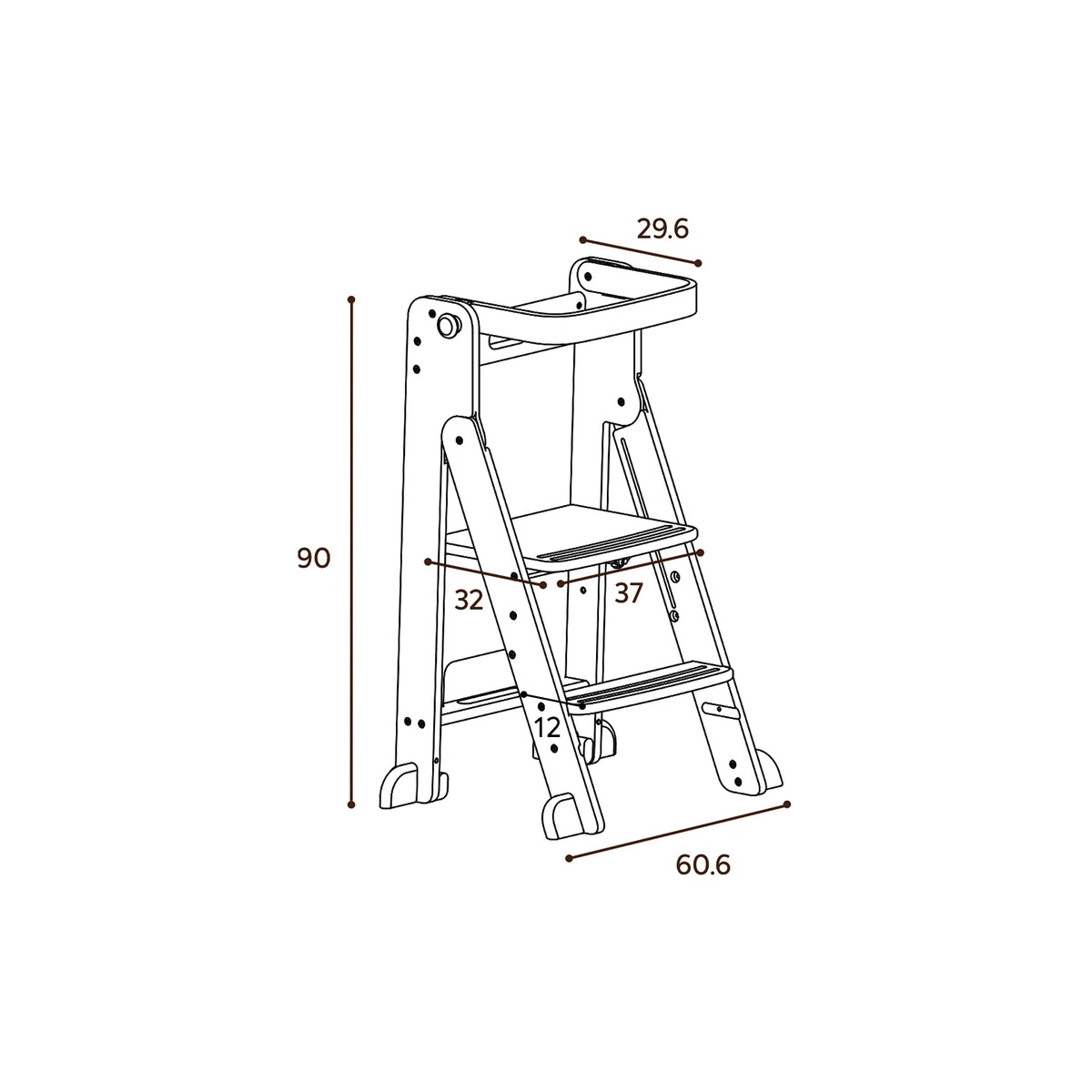
The design team started with structural safety. A classic triangular frame was chosen because it is naturally stable and safe for daily use. Little Helper Learning Tower features:
- Frame geometry: Classic foldable triangular structure
- Creative feature: Integrated drawing board
- Smart details: Carved slot with magnetic pen tray
- Primary benefit: Safe elevation for child autonomy
Instead of adding decorative extras, the team stripped away unnecessary details. Every line serves a functional purpose.

Designed for More Than Just the Kitchen
- Most learning towers stay trapped in the kitchen, taking up floor space. To bring more value to modern homes, extra functions were integrated naturally into the frame:
- Foldable frame: The tower folds flat easily so you can tuck it away when space is tight.
- Integrated drawing board: A whiteboard is built into the side panel, letting kids draw whenever inspiration strikes.
- Designed storage: A pen holder is carved directly into the frame with built-in magnets, keeping markers off the floor without adding extra parts.

Safety and Detail Control
Navigating child safety standards was the hardest part of the project. Safety rules for children's furniture are far stricter than standard home goods. Asu and Product Engineer Wang built and tested multiple prototypes to guarantee total frame stability.
During testing, our product engineer Wang noticed that early drawing board edges felt slightly sharp. The team adjusted the profile immediately to round off every corner.
Custom molds were used despite higher production costs, ensuring every touchpoint is safe for small hands.

Built to Be Passed Down
Real sustainability is about building pieces strong enough to last. When a learning tower is built to high quality standards, it serves your child through early growth.
Once your child outgrows it, a well-made tower can be passed down to younger siblings, shared with friends, or resold to another family. Keeping great design in active use across families is the most meaningful way to care for our environment.